


The Power Game Behind the U.S.-Iran Memorandum: Trump’s Shift, Missile Dispute, and a New Middle East Turn
Keywords: U.S.-Iran relations, Trump, Israel, ballistic missiles, memorandum of understanding, Middle East situation, Iran nuclear issue, regional security
Introduction
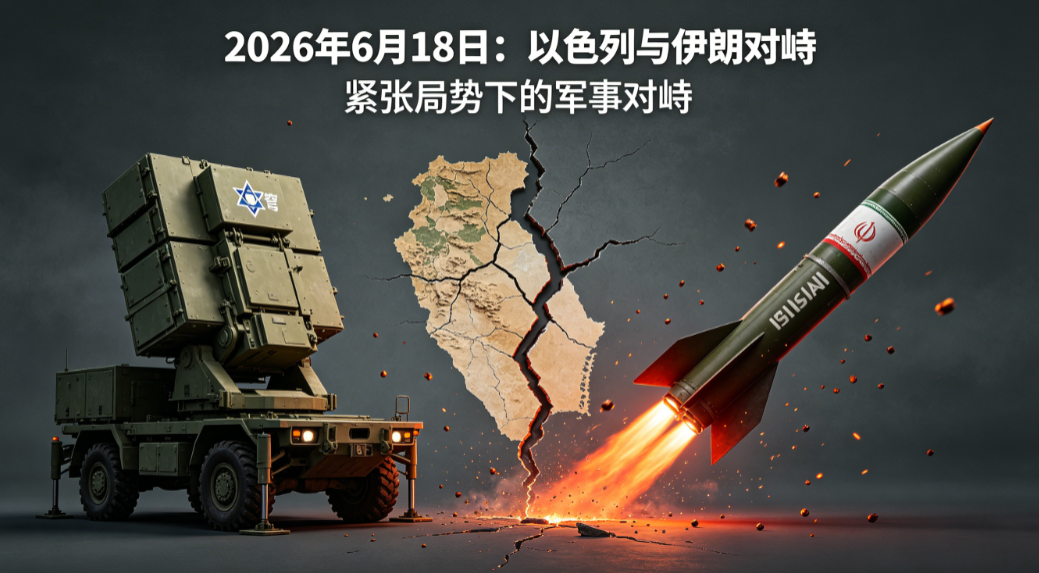
The United States and Iran have reached a memorandum of understanding, which should have been seen as an important sign of easing tensions in the Middle East. Yet disputes over the agreement’s content, implementation prospects, and the parties’ real intentions quickly made the memorandum the focus of a new round of geopolitical maneuvering. Most notably, President Trump recently said publicly that he does not oppose Iran having ballistic missiles. That stance is in stark contrast to his earlier hardline push to curb Iran’s missile capabilities, and it directly conflicts with the position of Israel, America’s most important ally in the Middle East.
On the surface, Washington and Tehran appear to be taking a step toward ending conflict, advancing a ceasefire, and opening talks. But at a deeper level, the memorandum looks more like the stage result of a complex exchange of interests. It touches on the nuclear issue, sanctions relief, energy trade, and the regional security order, while also exposing major strategic differences among the United States, Israel, and Iran. The key question now is whether the Middle East will move toward de-escalation or remain split between a paper agreement and real-world conflict.
1. Trump’s abrupt shift: what signal is he sending?
On the 17th, after attending the G7 summit in France, Trump told the media that if other countries have ballistic missiles and Iran does not, that would be “unfair” to Iran. He even cited Saudi Arabia and Qatar, implying that Iran having missiles is not absolutely unacceptable. Compared with his repeated earlier calls to eliminate Iran’s ballistic missile capability, this is a clear shift.
This change is likely more than a rhetorical adjustment. It may mean U.S. policy toward Iran has moved from “suppression and destruction” to “limited management.” In the past, Washington’s core demands included limiting nuclear capabilities, weakening the missile system, and shrinking Iran’s regional influence. Yet in the memorandum’s official text, the missile issue is not included as a core clause. That suggests the United States has, at least for now, accepted a reality: military pressure alone can no longer force Iran to abandon its strategic capabilities.
Politically, Trump’s shift may also reflect practical considerations. Military intervention in the Middle East is costly, and prolonged conflict is hard for U.S. voters to accept. In a region marked by complexity and divided allies, brokering a ceasefire and talks may be easier to present to the public as a “manageable victory” than clinging to a hardline stance.
2. Why is the missile issue the core dispute?
The Iranian Foreign Ministry spokesperson made clear that Iran’s defense capabilities and missile program are “not negotiable” and will not be discussed with any party. That is a firm no-compromise position. For Iran, ballistic missiles are not just part of military power; they are a key pillar of national security and strategic deterrence.
Iran has long lived under security pressure. Facing U.S. military presence, Israeli strike threats, and containment by regional rivals, missile capability is seen as one of its most important asymmetric defense tools. For Tehran, yielding on missiles could mean losing its last line of defense in the regional security order. So whether out of sovereignty or deterrence needs, Iran is unlikely to accept any major cut to its missile force.
More importantly, the Trump administration’s earlier “15-point plan” explicitly sought to limit Iran’s missile numbers and range, showing that Washington once tried to make missiles a central bargaining chip. The fact that the final memorandum does not touch on the issue shows that the United States has already compromised in the real game. In other words, the missile issue has not disappeared; it has only been pushed off the immediate agenda.
3. Israel’s displeasure and the risk of disruption
As U.S.-Iran talks progress, Israel’s stance is especially important. Prime Minister Netanyahu said publicly that Israel does not know the specific contents of the deal; National Security Minister Ben-Gvir was even more blunt, saying the deal is not binding on Israel. That reflects not only dissatisfaction but also deep concern that Washington is moving ahead without Israel.
Israel has long seen Iran as one of its greatest strategic threats, especially because of Iran’s nuclear and missile capabilities. From Israel’s point of view, any arrangement that softens the hardline policy toward Iran could be read by Tehran as strategic looseness, increasing Iran’s influence in the Middle East. So Israel’s opposition to a substantive U.S.-Iran deal is hardly surprising.
The question is whether Israel can stop the process. In reality, it is difficult for Israel to change the overall direction of a U.S.-Iran ceasefire or agreement. But it can still interfere with implementation through intelligence activity, military pressure, information warfare, and diplomatic lobbying. Analysts say Israel may take actions within its reach that conflict with the memorandum, creating obstacles and even widening the U.S.-Iran rift.
That means the real challenge is only beginning even though the text has been released. Middle Eastern history has long shown that compromise on paper does not equal peace in practice, especially when a third party strongly objects.
4. What the text reveals about real-world compromise
From the published 14 clauses, the U.S.-Iran memorandum is broad in scope, covering ceasefire, respect for sovereignty, negotiation deadlines, lifting the maritime blockade, commercial shipping access, reconstruction investment, sanctions termination, nuclear handling, frozen-fund release, and enforcement mechanisms. Its features are clear: broad scope, many promises, and high implementation difficulty.
First, the memorandum calls for an immediate and permanent end to military operations on all fronts and confirms that the war is over. This shows both sides want to lower the intensity of the conflict quickly. Second, arrangements to lift the maritime blockade, restore commercial shipping, and reopen financial transactions show that the United States has made substantial economic concessions. In particular, the promise to invest at least $300 billion in Iran’s reconstruction and development means Washington is willing to trade economic benefits for security stability.
On the other hand, the clauses leave a lot of ambiguity. Many provisions say they will be confirmed in a “final agreement,” and several key issues are to be negotiated within 60 days. That makes the current document more of a framework than a complete end-state deal. As long as the final deal is not in place, all sides still have room to reinterpret, delay, or even backtrack.
In addition, while Clause 8 reiterates that Iran will not obtain or develop nuclear weapons, the handling of uranium enrichment and stockpiles is only described as a “minimum solution” and dilution under IAEA supervision, without very strict verification details. That means the nuclear issue is included in the framework but not truly resolved.
5. Outlook: easing tensions or a new strategic failure?
Some analysts argue that although the U.S. and Israel claim military success, the reality may be a strategic failure. The reason is simple: the conflict was originally meant to overthrow the Iranian regime and eliminate its nuclear and missile capabilities, yet it has not achieved those goals. Instead, Iran may emerge more politically cohesive, more strategically cautious, and better positioned to renegotiate and regain international space.
This is not alarmism. Historically, external pressure often pushes Iran to strengthen its own defenses, adjust its diplomacy, and exploit divisions among major powers to gain room to maneuver. Once the United States makes concessions on some issues, Iran may see them as proof of its strategic resilience.
Still, the agreement is not meaningless. For Washington, if the memorandum can calm tensions, restore maritime shipping, contain spillover from the war, and help stabilize energy markets and regional allies’ expectations, that is a real stage achievement. For Iran, sanctions relief, restored capital flows, higher oil exports, and reconstruction investment would clearly ease long-running economic pressure.
But the success of the memorandum will not depend on how complete the text is. It will depend on whether Washington and Tehran truly want to implement it, and especially on whether hardline regional forces such as Israel continue to introduce new variables.
Conclusion
The signing of the U.S.-Iran memorandum marks a new turning point in the Middle East, but it does not mean the conflict is over. Trump’s shift on Iran’s ballistic missiles shows a realist adjustment in U.S. policy; Iran’s insistence that its missile capability is “not negotiable” shows that its security red lines remain clear. At the same time, Israel’s dissatisfaction and possible continued disruption mean the agreement faces strong external pressure from day one.
More broadly, the memorandum reveals subtle changes in the Middle East order: the United States can no longer define the end of conflict on its own, Iran is pushing for room to negotiate under pressure, and Israel is trying to block any arrangement that could weaken its security demands. The next 60 days will be the key window for testing whether the deal can take hold. If restraint prevails, the region may see limited easing; if the rivalry escalates, the memorandum may prove to be only a brief pause before a bigger storm.



.png)

