


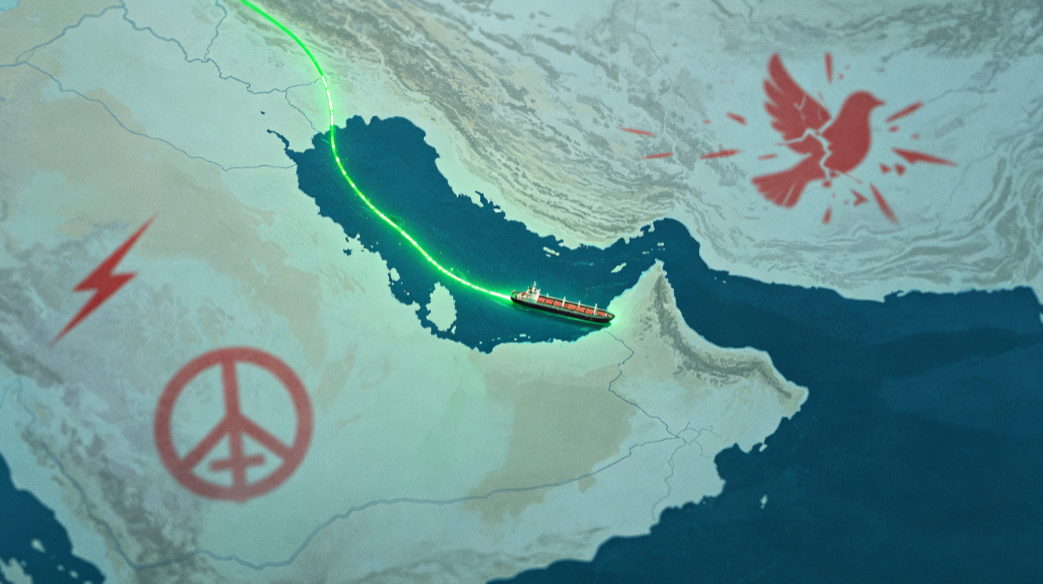
Has Shipping Through the Strait of Hormuz Returned to Normal? Energy Bargaining and Market Signals Behind the Initial U.S.-Iran Deal
Keywords: Strait of Hormuz, United States, Iran, energy transport, international oil prices, geopolitics, global supply chains
Introduction
U.S. Energy Secretary Chris Wright recently said that after the United States and Iran signed an initial agreement and pushed to reopen the Strait of Hormuz, traffic through this global energy shipping route has “returned to normal.” His remarks not only suggest a stage-by-stage easing of months of shipping tension, but also bring into sharp focus the fragility of the international energy market, the complexity of geopolitical bargaining, and the sensitivity of the global crude supply chain.
As the key waterway connecting the Persian Gulf to global markets, the Strait of Hormuz carries about 20% of the world’s oil shipments. Whether it is stable directly affects international oil prices, natural gas prices, and global inflation expectations. For countries heavily dependent on energy imports, the passage conditions through this narrow strait often matter more to market sentiment than macroeconomic data.
1. What does “back to normal” mean?
Wright’s main point is that oil and gas shipments through the Strait of Hormuz have returned to near-normal levels and that this trend will not reverse because of changes in the talks. He even said he is “no longer in the business of predicting oil or gasoline prices,” but that energy prices “will keep going down.”
From a market standpoint, this judgment rests on the idea that the shipping risk premium is fading. If there had been a blockade risk, inspection risk, or a threat of military escalation, the crude futures market would normally have priced in an “interruption expectation” quickly, pushing prices up in the short term. Now, with the initial U.S.-Iran deal in place, concern over supply disruption has eased and the return of shipping is naturally pressuring oil prices lower.
But “back to normal” does not mean the risk has disappeared. The strait is geographically narrow, military presence in the region is dense, and interests are deeply intertwined. Even if traffic has resumed, the market will remain highly alert to future talks, regional tensions, and the details of implementation.
2. Data gaps reveal information warfare and perception gaps
It is worth noting that the data on transit volume is not fully consistent. U.S. Central Command said 55 commercial ships passed through the strait on Saturday, carrying more than 17 million barrels of oil and other cargo. But shipping intelligence firm Kpler reported only 20 vessels that day, well below the U.S. figure.
Such differences are not unusual, but they matter. Different institutions may use different statistical methods, time windows, and identification standards. In a highly sensitive geopolitical environment, data itself can also become part of the strategic narrative. Publicly saying that the strait is once again busy helps send a signal of stability and ease investor and importer anxiety.
However, if no consensus forms around the data, the market will continue to price in uncertainty. For shipping companies, even if the sea lanes reopen, insurance rates, security costs, crew sentiment, and port scheduling efficiency all affect actual transport capacity. So true “normalization” means not just more ships, but also the fading of the associated risk premium.
3. Why the Strait of Hormuz remains the key card
The Strait of Hormuz has long been seen as the “throat” of the global energy market because it is irreplaceable. The Persian Gulf is one of the world’s most important oil-producing regions, and most exports from the area must pass through this narrow sea lane to reach international markets. If the route is blocked, the impact goes beyond oil prices to LNG, shipping insurance, refining chains, and end-consumer prices.
For Iran, the strait is not just a geographic passage but a strategic lever. In diplomacy and security talks, Iran always holds this tool of “controlled escalation”: it does not necessarily need to fully shut the waterway, but the threat alone is enough to force the other side to reconsider the terms. That is why the strait remains a key issue even after an initial U.S.-Iran deal.
Reference material shows that Trump made it clear he did not want the strait to remain blocked and trigger a global energy crisis and economic disaster. Iran, however, claims the memorandum gives it the right to charge transit fees. The tension between those positions shows that the two sides do not define “opening” in the same way. For Washington, the key is stable energy supply; for Tehran, preserving some form of sovereignty claim and revenue mechanism is the core interest.
4. Energy prices may weaken in the short term, but long-term variables remain
Wright’s view that oil and gasoline prices will keep falling reflects market expectations for restored supply. But over a longer horizon, international energy prices are still shaped by many variables and may not move in a straight line.
First, geopolitical risk will not disappear because of one memorandum. If implementation falters or regional tensions rise again, the market will quickly reprice risk. Second, global demand is changing too: growth in major economies, manufacturing activity, and transport demand can all alter energy-price trends. Third, OPEC+ output policy, U.S. shale supply capacity, and shipping-cost changes will keep disrupting the market.
So the current pullback should be understood as “risk relief,” not “risk elimination.” For policymakers, the most important issue is not short-term oil moves, but how to build a more sustainable balance between diplomacy, energy security, and regional stability.
Conclusion
The news that shipping through the Strait of Hormuz has “returned to normal” looks like a repair to shipping order, but in reality it is the outcome of U.S.-Iran bargaining, global energy security, and market expectations all interacting. The initial deal has given the international market a brief period of stability and provided a real basis for lower oil prices. But in the long run, the strait remains one of the most sensitive geopolitical nodes, and its stability will still depend on negotiation progress, the regional security environment, and how the parties redraw their boundaries of interest.
It is foreseeable that the Strait of Hormuz will not leave the center of global energy news anytime soon. It is both a lifeline for energy transport and a test of international power games. In the short term, the market may expect prices to ease; but more fundamentally, what needs to be restored is not only passage through the strait, but also a stable energy-security order around it.



.png)

