

2026 Gold Investment Strategy: How Asian Markets Capture the Dual Value of Gold as a Hedge and Store of Value
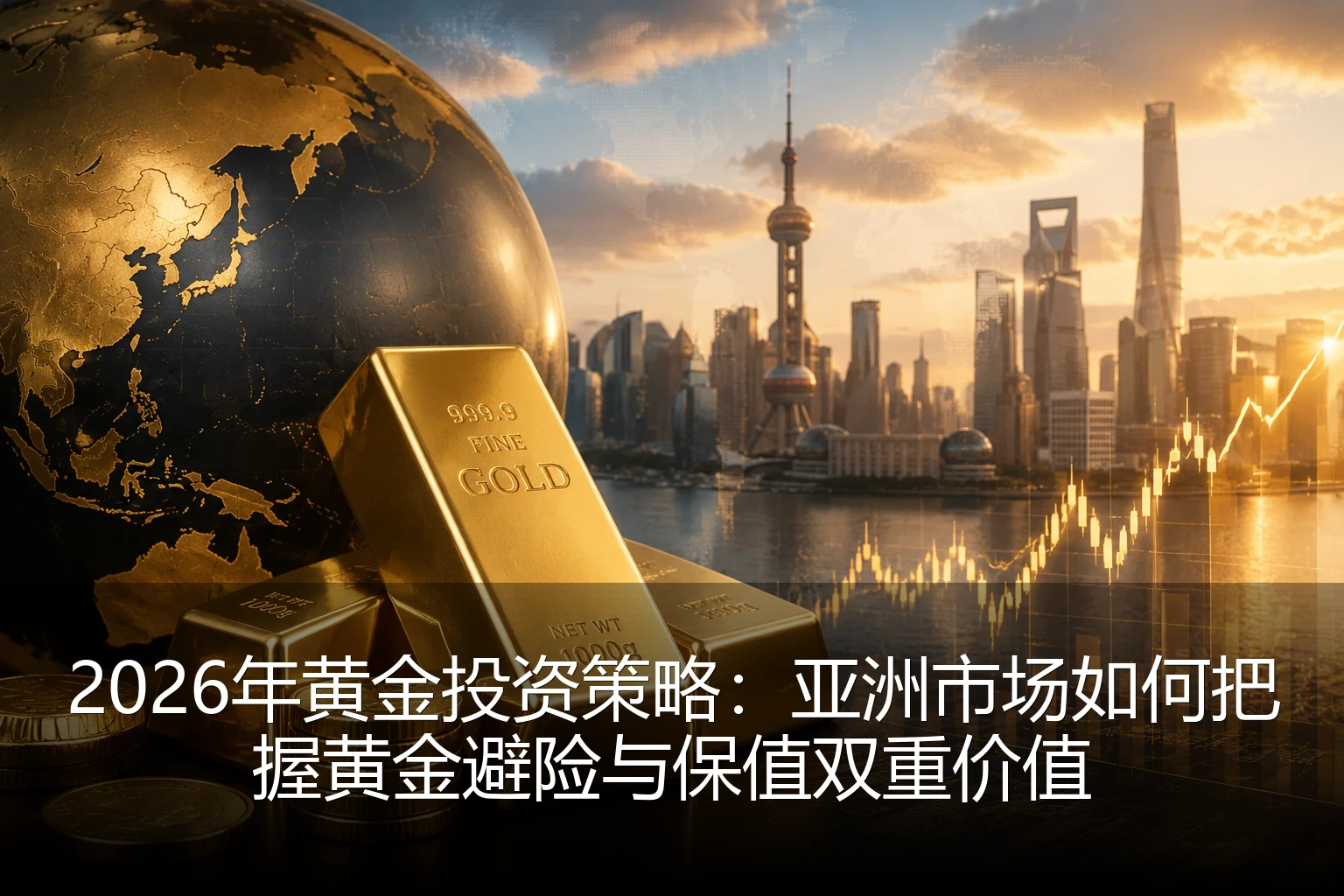
Against the backdrop of increasing global economic uncertainty and rising geopolitical risks, gold, as a traditional safe-haven asset and store of value, has once again become a focus for Asian investors. Since 2026, the Asian gold market has shown unprecedented activity, with central banks in various countries continuously increasing gold reserves, and individual investor demand for gold reaching historic highs. This article will deeply analyze the strategies and value of gold investment in the current economic climate to help Asian investors seize opportunities in the gold market.
Gold: A Hedge Asset Across Cycles
The history of gold as a safe-haven asset dates back thousands of years to ancient civilizations. Although the status of gold in the modern financial system has faced multiple challenges, it has consistently maintained its unique value. The global economic environment in 2026 is full of uncertainty: major economies continue to face inflationary pressures, geopolitical conflicts are frequent, and financial markets are volatile. Against this background, the hedging properties of gold are once again highlighted.
According to the latest data from the World Gold Council, global gold ETF holdings reached a record high in the first half of 2026, and gold demand in the Asian region grew by over 20% year-on-year. This trend indicates that an increasing number of Asian investors view gold as an indispensable part of their asset portfolio. Gold not only provides protection during economic turbulence but also effectively hedges against inflation risk, which is why it is so favored in the current environment.
Unique Characteristics of the Asian Gold Market
The Asian gold market exhibits characteristics significantly different from European and American markets. First, Asian countries have a deeper cultural tradition regarding gold; many nations regard gold as a symbol of wealth and an important gift, providing a solid fundamental support for the physical gold market. Second, the rapid rise of the Asian middle class has driven growth in gold consumption and investment demand. Finally, the continuous accumulation of gold reserves by Asian central banks in recent years, aimed at reducing reliance on the US dollar, has further elevated the strategic status of gold in the Asian region—a trend of "de-dollarization."
It is worth noting that investment methods in the Asian gold market are also diversifying. Traditional physical gold investment still holds an important position, but the popularity of financial derivatives such as gold ETFs and gold futures in the Asian market is also continuously increasing. This diversification reflects the deepening understanding of gold by Asian investors and the continuous improvement of gold investment channels.
Comparison of Major Gold Investment Forms
For Asian investors, choosing the appropriate form of gold investment is crucial. The main forms of gold investment on the market currently include physical gold, gold ETFs, gold futures, and gold stocks. Each form has its own unique advantages and disadvantages, and investors should make reasonable choices based on their investment objectives, risk tolerance, and investment horizon.
- Physical Gold: Includes gold bars, gold coins, and gold jewelry. The advantage of physical gold lies in its intuitive value, strong liquidity, and immunity from counterparty risk. However, physical gold also has issues such as high storage costs and difficulty in authentication. For Asian investors who value traditional value and physical holding, physical gold remains the first choice.
Formulating a Scientific Gold Investment Strategy
In the market environment of 2026, how should Asian investors formulate a scientific gold investment strategy? First, investors should clarify the positioning of gold in asset allocation. Gold is generally considered a defensive asset, suitable for occupying 5%-20% of a portfolio, with the specific proportion adjusted according to the investor's risk appetite and market conditions.
Second, investors should adopt a diversified investment strategy. Different forms of gold investment have their own characteristics. Diversifying funds across products such as physical gold, Gold ETFs, and gold futures can effectively reduce investment risk. Furthermore, investors can consider combining gold with other asset classes like stocks and bonds to further diversify risk.
Third, investors should pay attention to the driving factors of gold prices. Gold prices are influenced by multiple factors, including the movement of the US dollar, real interest rate levels, geopolitical risks, and central bank gold purchases. Asian investors should pay particular attention to regional developments in Asia, such as changes in gold demand in China and India, and the gold purchasing policies of Asian central banks, as these factors have a particularly significant impact on the Asian gold market.
Risk Management: The Key to Gold Investment
Although gold is considered a safe-haven asset, all investments carry risks. Gold prices are also affected by factors such as market sentiment and changes in liquidity, leading to significant fluctuations. Therefore, risk management is the key to gold investment.
First, investors should avoid excessive leverage. Although derivatives such as gold futures can magnify returns, they can also magnify risks. Investors should reasonably control the leverage ratio according to their own risk tolerance.
Second, investors should establish a stop-loss mechanism. Setting a reasonable stop-loss point helps investors control potential losses and avoid larger losses caused by emotional decision-making.
Finally, investors should maintain a long-term investment perspective. Short-term fluctuations in gold prices are difficult to predict, but in the long run, the value of gold is relatively stable. Investors should avoid frequent trading and adopt a long-term holding strategy to fully utilize gold's hedging function.