


2026 MWC Shanghai observations: 6G shifts from 'what to do' to 'how to do it,' while satellites enter the cost-down stage of large-scale networking
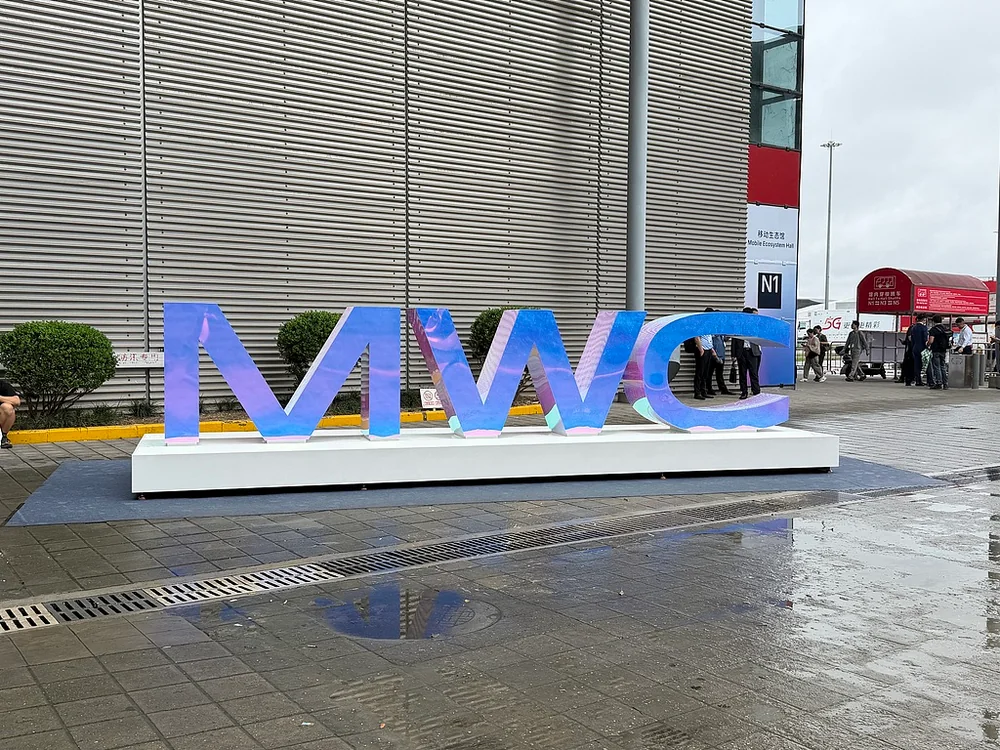
Recently, the 2026 MWC Shanghai opened as scheduled. Unlike last year's lively atmosphere of dense 5G-A commercial order rollouts, this year's hall felt more cautious and pragmatic: the 6G industry ecosystem zone and the 'future constellation' satellite zone drew strong crowds, but the industry was more interested in asking when technology could turn into real money.
In the 6G track, the three main paths—integrated sensing and communication, AI-native, and space-air-ground integration—are no longer in dispute, and chip makers have even begun advance R&D and inventory planning. In the satellite internet field, the scramble for orbital and frequency resources is basically over, and large-scale networking plus cost reduction have become the new theme.
However, consensus ends at the technical level. Terminal makers and investment institutions are generally staying on the sidelines: terminals are waiting for killer apps, and investors cannot calculate the payback period. Even profitable global satellite players are finding it hard to cultivate the early civilian market.
As the financial账 from 5G investment is not yet fully settled, 6G and satellite internet are collectively entering a transition period of 'clear vision, hard monetization.' The technical route keeps narrowing, while commercial pathways look broader and broader.
6G technical paths converge, but the business loop is still being explored
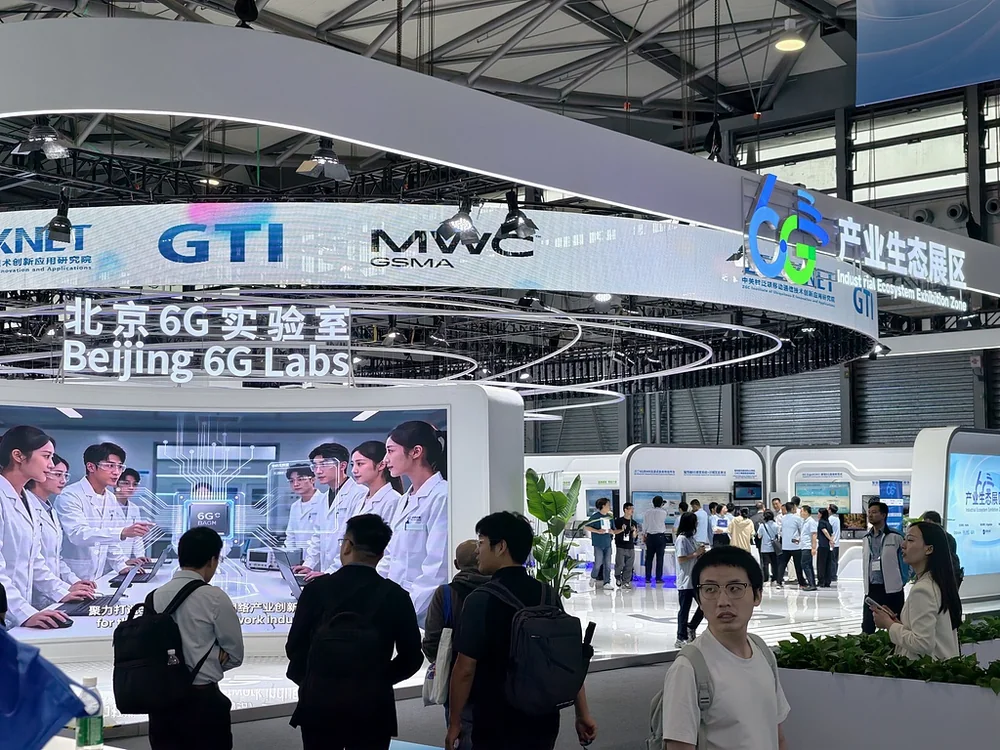
Walking into the 6G industry ecosystem zone in Hall N3 at MWC Shanghai, five sections—the Beijing 6G Laboratory main area, communications enhancement, integrated sensing and communication, communications-computing-intelligence integration, and space-air-ground integration—break down the core 6G vision in a clear and tangible way. Staff on site said this is the first time in MWC Shanghai history that a dedicated hall has been set aside for 6G, a clear signal that 6G has moved from conceptual debate into a key stage of system validation.
'Last year people were still arguing about what 6G should do; this year they're arguing about how to do it and what trade-offs to make.' Right now, the three enhancement paths—integrated sensing and communication, AI-native, and space-air-ground integration—have basically formed an industry consensus, while key technologies such as terahertz communications and intelligent metasurfaces are moving into prototype verification.
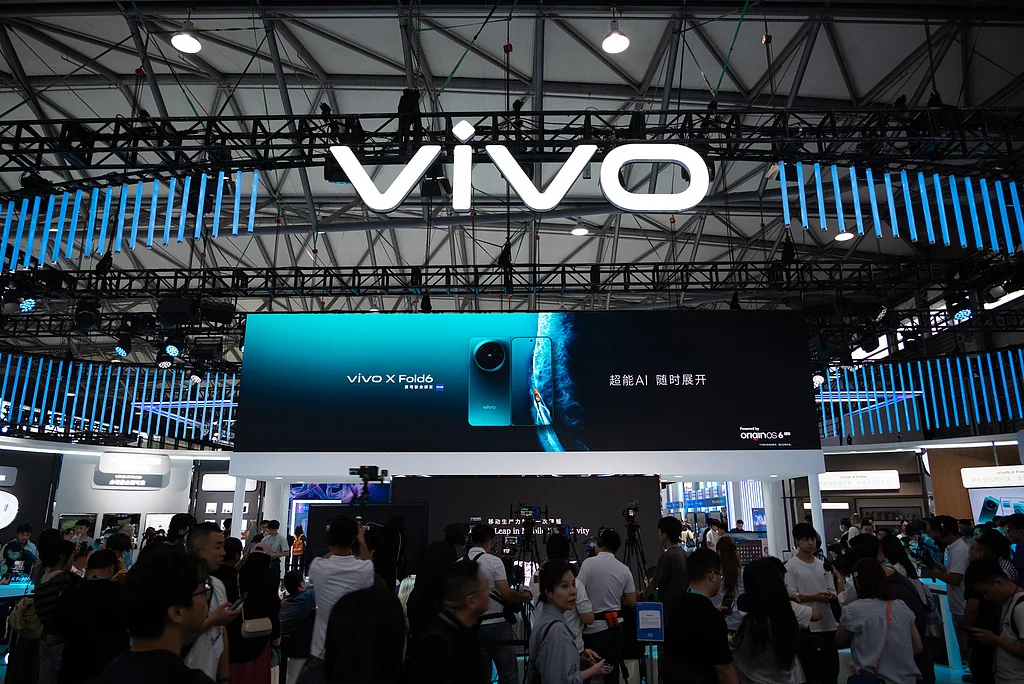
Momentum in the upstream supply chain is accelerating. At the show, Qualcomm displayed an end-to-end 6G prototype system, GalaxySpace publicly showed its self-developed second-generation phone-direct-connect phased-array antenna for the first time in the 6G ecosystem zone, and vivo presented its 6G pre-research prototype and technical roadmap.
According to introductions, companies are focusing on different areas. Xiaomi is emphasizing underlying transmission algorithms, OPPO is focusing on communications paradigm innovation, while vivo is leaning more toward end-to-end systems and application rollout. Its complete 6G test system covers the full chain, including MR terminals, 6G terminal prototypes (UE), 6G base stations (RAN) and core network components.
A representative from a domestic chip maker said the company's internal 6G pre-research team has doubled in size compared with last year, on the logic that: 'If we wait until the standard is frozen before starting, it will be too late. We must prepare the technology in advance.'
Terminal makers are more cautious. Feedback on 6G terminal planning from several phone brands is mostly 'closely monitoring,' and consumer-grade 6G product demos are rarely seen at the booths. A 6G pre-research director from a global top-five smartphone maker said in conversation that it is difficult to produce a clear 6G smartphone commercialization roadmap, not because of insufficient technical capability, but because the path for transforming user needs and application scenarios on the terminal side is still under review. In his view, the experience dividend from 5G has not yet been fully released, and immersive holographic and multi-sensory 6G scenarios are still some distance from large-scale consumer adoption.
The investment community is similarly cautious. After observing multiple 6G demos, an early-stage investor said the technology direction is impressive, but from an investment perspective, the capital return from 5G is still being digested. The scale of subsequent 6G R&D and network deployment spending will be huge, and the exit cycle and return expectations lack enough data support. So for now, the strategy is mainly to track and watch, while waiting for a clearer commercial signal before making a move.
'Future constellation': the layout is taking shape, but the profit path still needs validation
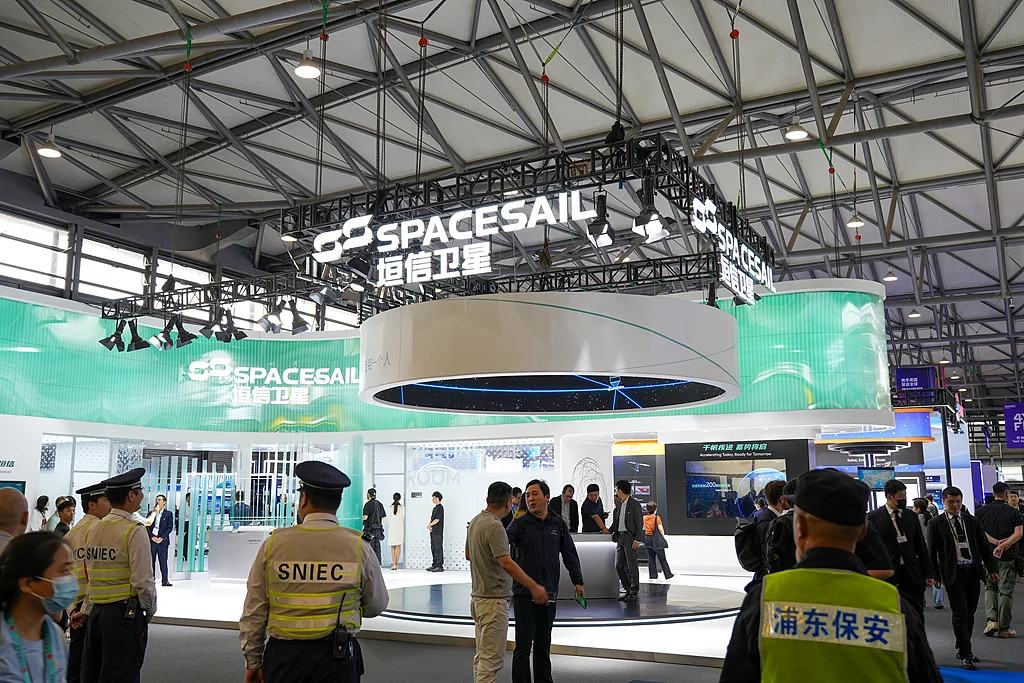
Unlike the 6G zone, which focused on validating key technologies, the newly established 'future constellation' satellite industry zone showed a different tempo: the orbital layout is beginning to take shape, and participants are entering a phase of fine-grained resource and cost optimization.
Spacetime Geely, Guodian Gaoke, Yuanxin Satellite and other domestic low-orbit broadband and narrowband constellation operators, along with international players such as Iridium, set up large-scale booths. Spacetime Geely displayed real low-orbit satellite internet terminal equipment for ocean-going ships and desert mining areas; Guodian Gaoke highlighted Tianqi Constellation use cases in the IoT field; Yuanxin Satellite engineers played a live video-call test based on the 'Qianfan Constellation.'
A Guodian Gaoke representative said the fight for orbital and frequency resources in satellite internet is now basically over, and the key issue is large-scale deployment and cost control. He revealed that the mass-production cost of the company's narrowband communication payloads has been falling steadily, but the user scale for satellite internet services has not yet reached breakeven, so at least for the next few years, government and industry orders will remain the basic support for revenue.
In the process of forming a profit model, terminal cost is a link worth watching. In discussions with antenna and module makers, most interviewees said costs are dropping quickly and that integration into mainstream handset designs is already feasible, but most did not disclose specific numbers.
An Iridium business manager at the booth said Iridium achieves positive cash flow through narrowband voice and low-speed data services, but the traditional market is becoming saturated; future growth will need to expand into IoT and emergency communications. Domestic low-orbit broadband constellations are still in the stage of scale-first catch-up, and reaching breakeven will require time and user accumulation.



.png)

